
What is it and why do I need it
Our brains never switch off not even while we sleep, where billions of neurons are constantly sending electrical messages to one another. A QEEG (Quantitative Electroencephalogram) helps us get a snapshot into that. A window into the brains communication pattern and a way of listening in on the brain’s internal conversations.
The QEEG does not read thoughts.
Instead, it measures brainwave patterns that show us how efficiently different brain regions are working together. When these conversations are balanced, we see:
- Better focus
- Improved emotional regulation
- Restful sleep
- Calm but alert and functioning
When they are dysregulated we experience symptoms such as:
- anxiety,
- impulsivity,
- brain fog,
- poor sleep, or
- burnout may appear.
Understanding Your Nervous System
To understand NeuroTherapy, it helps to understand the two main parts of the nervous system.
Voluntary Nervous System (Somatic)
This is the system you consciously control. It allows you to:
- Move your body
- Speak and write
- Direct your attention
- Make intentional choices
Involuntary Nervous System (Autonomic)
This system runs automatically in the background, managing vital functions such as:
- Heart rate
- Breathing
- Digestion
- Stress responses
- Sleep cycles
The autonomic nervous system has two key branches that must stay in balance.
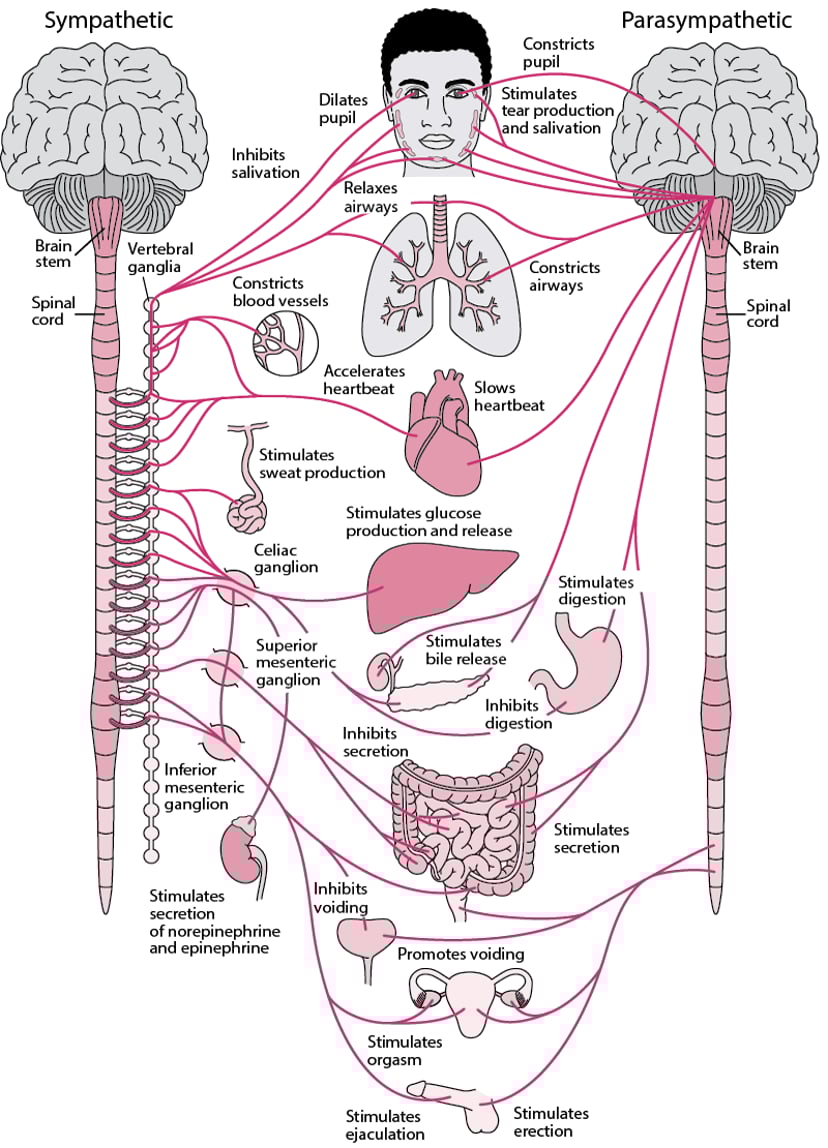
One branch: Fight or Flight (Sympathetic Mode): This is your brain and body’s survival response.
When activated:
- Heart rate increases
- Muscles tighten
- Breathing becomes faster
- Focus narrows
- The body prepares for action
This state is helpful in true danger — but many modern adults and children remain stuck in chronic fight-or-flight, especially with:
- Anxiety
- ADHD patterns
- Trauma
- Chronic stress
- Burnout
Second branch: Rest and Digest (Parasympathetic Mode)
This is the body’s recovery and healing state.
When dominant:
- The body calms
- Digestion improves
- Sleep deepens
- Emotional regulation strengthens
- The brain can learn and integrate efficiently
Optimal health requires the nervous system to flexibly move between these two states.
How NeuroTherapy Helps
1. Help to Identify patterns in the brain
- Over-arousal (busy, anxious brain)
- Under-arousal (foggy, low-energy brain)
- Regulatory inefficiencies
- Frontal-striatal challenges
- Sleep-related dysregulation
2. Personalised Neurofeedback Training
Using the brain’s natural neuroplasticity, neurofeedback helps the brain learn more efficient patterns through real-time feedback. Over time, many clients experience improvements in:
- Focus and attention
- Emotional regulation
- Sleep quality
- Stress resilience
- Cognitive clarity
- Behavioural regulation
In Neuro Therapy we look at…
- Evidence-based brain mapping (QEEG)
- Individualised neurofeedback protocols
- A whole-nervous-system perspective
- Clinical insight with compassionate care
- Experience with both children and adults
Our goal is not to force the brain — but to help it rediscover efficient, flexible regulation.
Book a Brain Mapping Consultation
If you are ready to better understand your brain — or your child’s — NeuroTherapy offers a gentle, data-driven starting point.
Visit: www.neuro-therapy.co.za
Location: South Africa, Jeffreys Bay
Make a booking here