
There is another beautiful aspect of the Vielight Neuro Duo. As mentioned in my previous post
The near-infrared light can be delivered in different pulse patterns, including Alpha at 10 Hz and Gamma at 40 Hz. These frequencies are interesting because the brain itself operates through rhythmic patterns of electrical activity. The aim is not to impose a particular brain state, but to provide a carefully selected form of stimulation that may interact with the brain’s own rhythms.
Alpha — 10 Hz
Alpha is often associated with states of relaxed wakefulness — a brain that is present, but not constantly on high alert. It is the feeling of having enough space between the thoughts. For some people, Alpha is particularly interesting when the intention is to support calm, relaxation and nervous-system settling. Think of Alpha not as switching off the brain, but rather as:
creating space.
Simply allowing the system an opportunity to move towards a quieter, more regulated state.
Gamma — 40 Hz
Gamma is a very different rhythm. It is associated with higher-order information processing and has been studied in relation to areas such as attention, memory and cognitive processing. The Neuro Duo’s 40 Hz Gamma setting therefore offers a very different experience from Alpha. Think of Gamma as:
bringing the brain into a more engaged state.
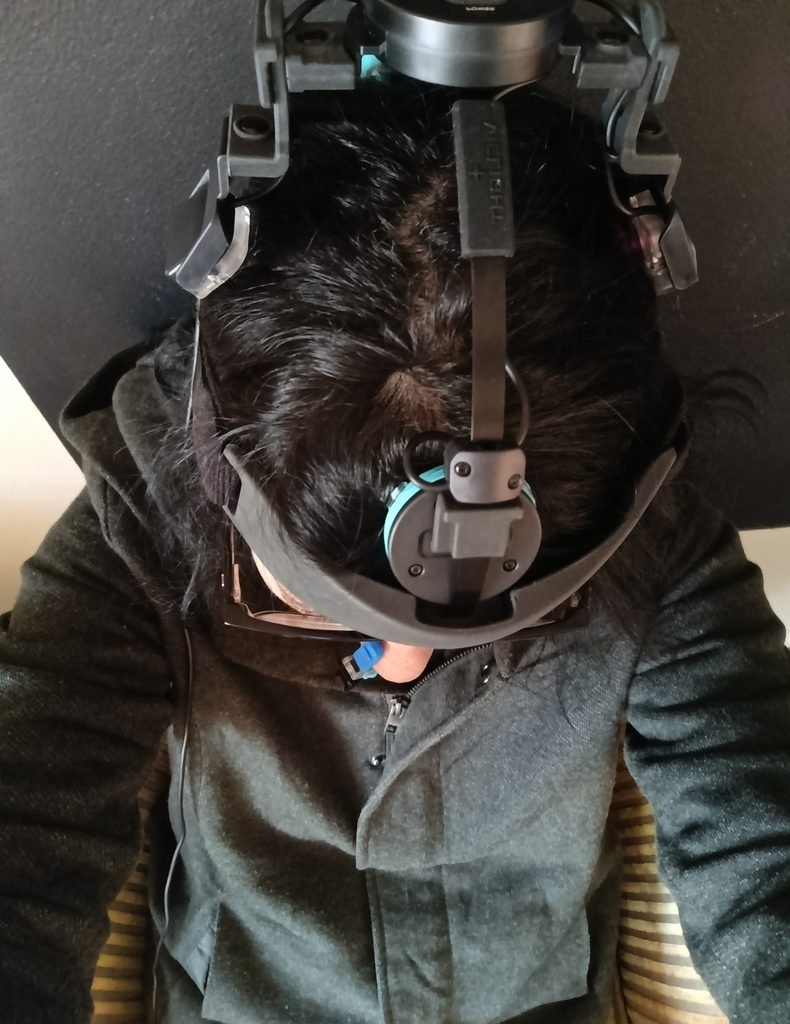
Sometimes we need energy and focus. Sometimes we need calm and recovery. Sometimes we need to move between the two. This is one of the reasons I value having both settings available. Rather than asking: “Which frequency is better?” I prefer asking: “What does this brain need right now?” That question fits beautifully into the way I approach NeuroTherapy. We are not trying to force every brain into the same pattern. Every brain has its own rhythm, history, demands and unique blueprint.
What does it actually feel like?
This is often the first question people ask. There is no single experience. Some people feel deeply relaxed, others feel clearer or more alert. And some people feel very little at all during the session. That doesn’t necessarily tell us what is happening biologically. PBM is not designed to create a dramatic sensation. We look at the subtler questions.
These changes are often much more meaningful than what happens in the 20 minutes immediately after a session.
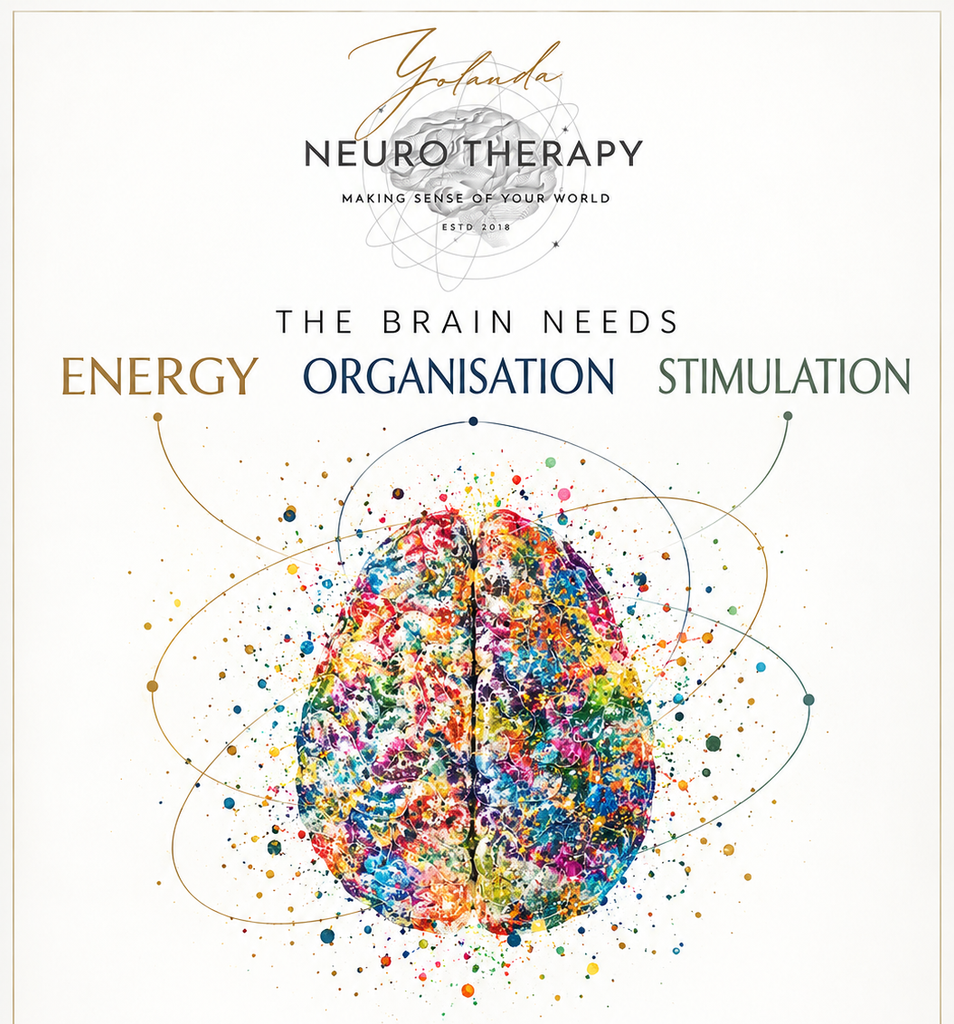
Energy is one of the three concepts at the heart of my NeuroTherapy approach:
- Energy.
- Organisation.
- Stimulation.
PBM belongs primarily to the conversation around energy. Because a brain needs energy before it can effectively use stimulation.
A note on the science
Photobiomodulation is an active area of research. Studies have reported promising findings involving mitochondrial function, cerebral blood flow, neural activity and aspects of cognitive function, but protocols differ considerably and research is continuing. A systematic review of human cognitive studies found encouraging results while also noting the need for further high-quality trials.
At NeuroTherapy, PBM is therefore used as part of an individualised approach rather than as a stand-alone treatment or a guarantee of a particular outcome.