
Vielight for Brain Health…when the brain needs the quiet power of photobiomodulation (light).
The brain is an extraordinary organ. It constantly receives information, makes predictions, regulates the body, and manages movement. We store memories and adapt to everything happening around us. All of this requires energy. At the center of that energy system are our mitochondria. They are microscopic structures within our cells responsible for producing much of the energy our cells use.
In the brain, this becomes particularly important. Neurons are energetically demanding cells. They need energy to communicate, maintain their electrical activity and respond to the changing demands of the environment. So perhaps supporting the brain isn’t always about asking it to do more. Sometimes, it begins by giving it the conditions in which it can do what it already knows how to do.
The language of light
This is where Photobiomodulation, or PBM, becomes fascinating. PBM uses specific wavelengths of red and near-infrared light to interact with biological tissue. At NeuroTherapy, I use the Vielight Neuro Duo, which delivers near-infrared light at 810 nm. The light is invisible to the eye. At the cellular level, it can interact with structures involved in energy production, particularly the mitochondria.
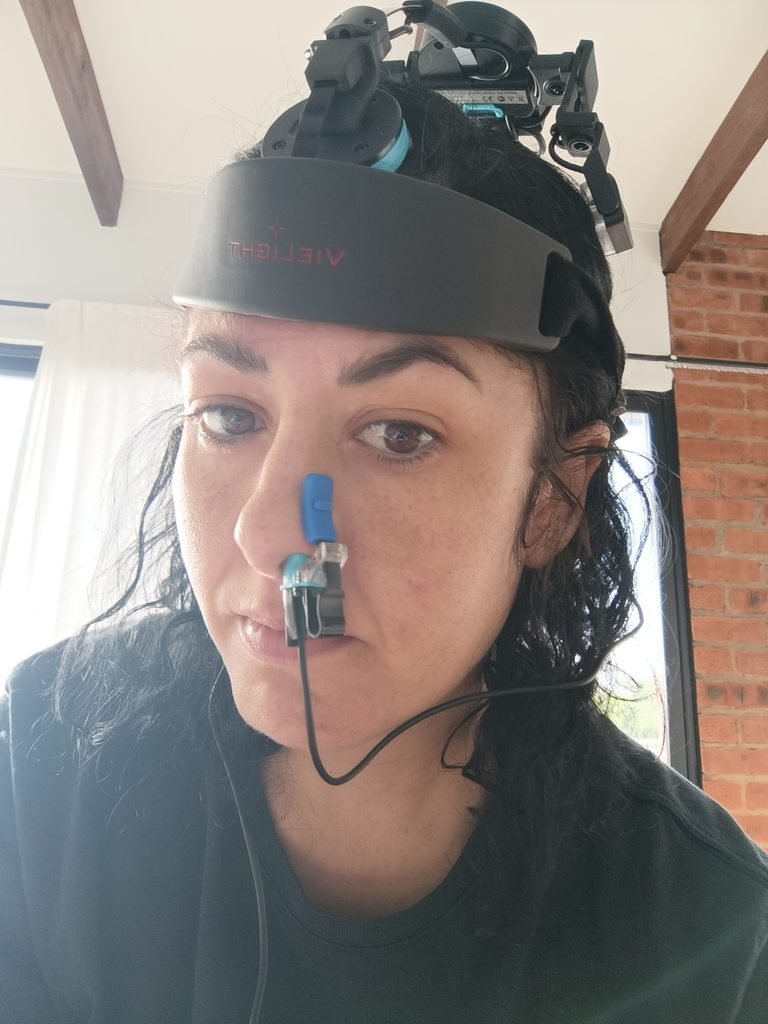
So, what exactly is PBM?
Photobiomodulation means using specific wavelengths of light (red or near-infrared light) to influence cellular activity. The Vielight Neuro Duo uses 810 nm near-infrared light. Unlike visible light, near-infrared light is invisible to us, but it can penetrate biological tissue and interact with cellular processes.
Your mitochondria are your cells’ little energy factories.
Every brain cell needs energy. A lot of it. Your brain may represent a small percentage of your body’s weight, but it has an enormous energy demand. Neurons are constantly communicating, maintaining electrical gradients, processing information, and adapting to their environment. The mitochondria inside our cells help produce this energy in the form of ATP. You can think of ATP as the brain’s usable energy currency. PBM appears to interact with mitochondria. It interacts particularly with an enzyme called cytochrome c oxidase, which sits within the mitochondrial respiratory chain.
Why would the brain need this?
Imagine trying to run a high-performance computer when the power supply is inconsistent. The computer might still work. But you may notice.
- slower processing
- reduced concentration
- mental fatigue
- difficulty switching between tasks
- reduced resilience under stress
- difficulty maintaining performance for long periods
Brains are not computers. The analogy helps us understand the importance of cellular energy. Neurons need energy to communicate.
- They need energy to maintain their electrical activity.
- They need energy to adapt and learn.
- They need energy to recover.
- And they need energy to regulate the complex networks involved in attention, memory, movement, emotional regulation and cognition.
This is why I am particularly interested in PBM as part of a broader NeuroTherapy approach.
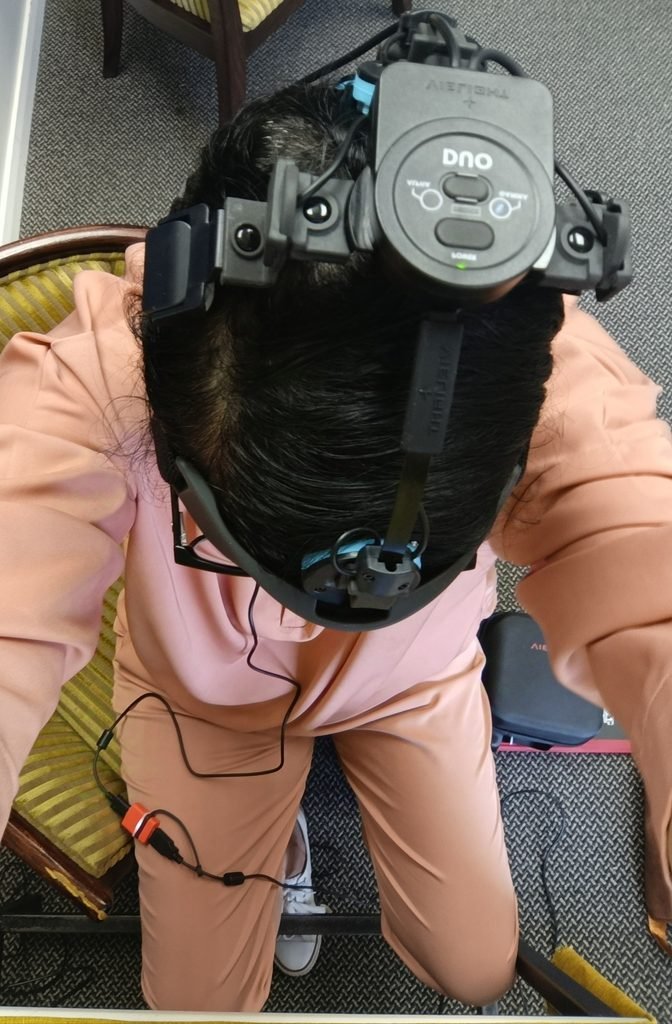
Before we ask the brain to perform more, we should consider its capacity. We also need to ensure we are supporting the brain’s ability to perform.
The Vielight Neuro Duo is more than light. It offers pulse patterns, including Alpha at 10 Hz and Gamma at 40 Hz. These frequencies reflect how the brain uses rhythmic electrical activity. Read more about it here.